When to Go · 13 min read
The Best Time to Visit Long Island Wine Country
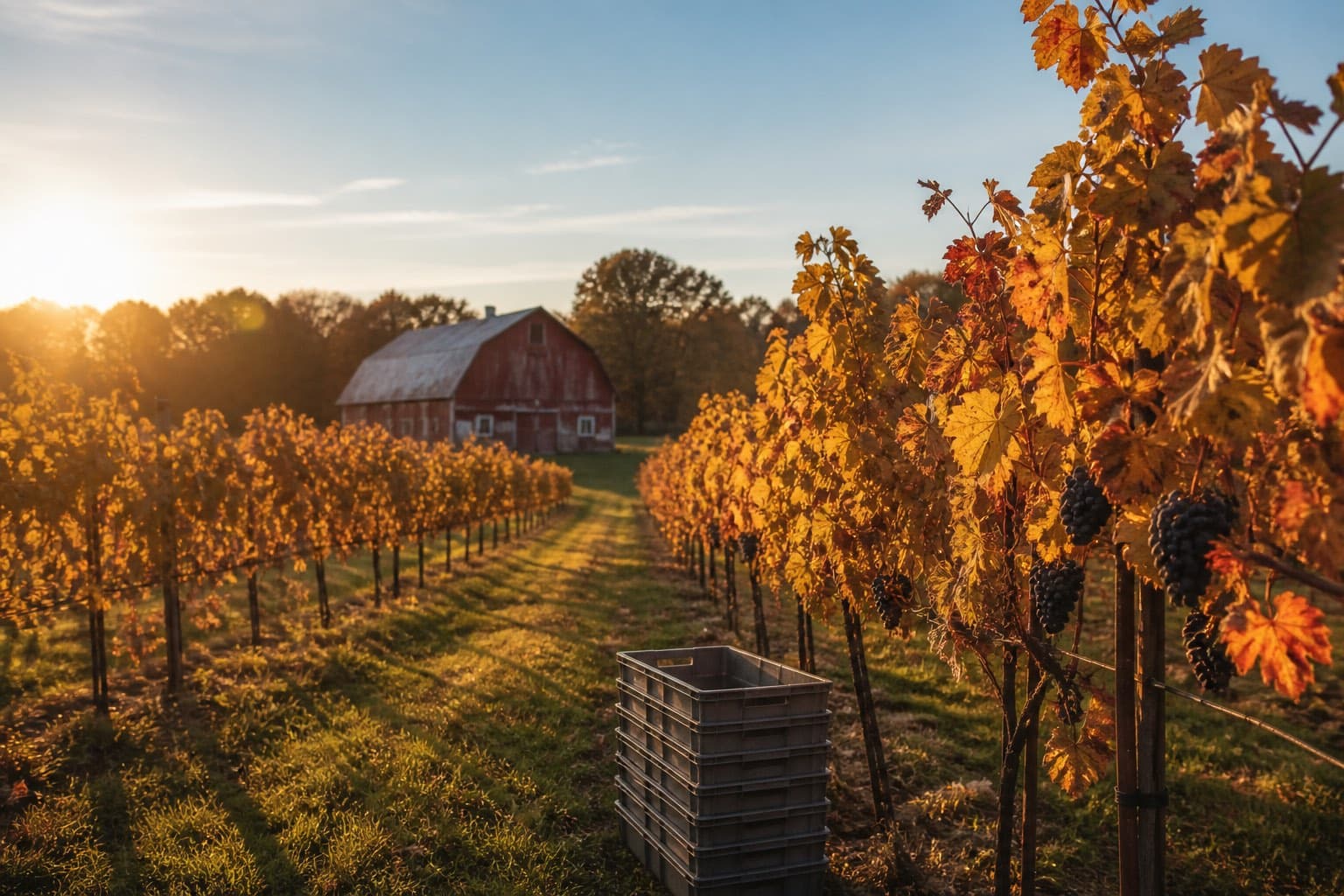
Harvest is the best wine of the year and the worst roads of the year, and the two are barely related — the queue on Sound Avenue in October is families going to buy pumpkins. Here is what each month actually gives you: which lawns are open, which rooms are dark, and what is in the glass when you get there.
Published
There is no single best time, because four things peak separately
Every guide to this region answers the question with one word — autumn — and then shows you a photograph of a vine row in October. It is not wrong. It is just answering a different question from the one most people are asking.
Four separate things change across the year out here, and they do not peak together: how many tasting rooms are open, whether you can sit outside, how long you will queue, and what is actually in the bottle when you arrive. September and October win the third and fourth of those and lose the second and third badly. May and June win almost everything except the drama of harvest. So the honest verdict is a short list rather than a month:
- Best day out: the last two weeks of May and the first two of June. Everything open, the lawns and gardens back after winter, highs of 70 to 79°F.
- Best wine: late September to the end of October, when the fruit is coming in and the room smells of fermentation.
- Best compromise: a weekday in the second half of October, after the farm traffic starts to fade.
- Best for talking to winemakers: March, when nobody is there and everybody has time.
- Worst: a July Saturday afternoon, and any Tuesday in January.
Month by month, with the numbers
The temperatures below are the 1991–2020 normals for the Riverhead research farm, the weather station sitting in the middle of the growing region rather than out at the end of the fork. Rainfall barely varies — every month lands between three and five inches — so the thing that changes across the year is not whether it rains but whether the outdoor seat you booked exists yet.
| Month | Avg high | What is happening | How busy |
|---|---|---|---|
| January | 40°F | Pruning starts; McCall closed; the ciderhouse shut two to three weeks | Empty |
| February | 41°F | Rosé and whites stabilising for bottling; RGNY closed Tue–Wed | Empty |
| March | 48°F | Pruning wrapped, bud break coming; indoor tastings only | Quiet |
| April | 60°F | Gardens and lawns reopen; Harbes and Croteaux come back | Quiet midweek |
| May | 70°F | Everything open, furniture out, music series start | Busy from Mother’s Day |
| June | 79°F | Longest days; the new rosé is on every list | Weekends full, weekdays fine |
| July | 84°F | Peak season; about five days above 90°F land this month | Worst Saturdays of the year |
| August | 82°F | Fruit colouring; picks four to eight weeks out; evening concerts | Crowded, harvest traffic starts |
| September | 76°F | Sparkling picked first, then whites; warm days, cool nights | Crowded but worth it |
| October | 65°F | Reds coming in; leaves turning; stomp parties and pick-your-own harvest days | Pumpkin traffic on Sound Avenue |
| November | 54°F | Petit Verdot picked in week one; every outdoor season closes | Quiet after the first week |
| December | 45°F | Indoor rooms, holiday buying, 17 nights below freezing | Quiet apart from parties |
The day of the week does more damage than the month
This is the part that gets skipped. You can pick the perfect week and still lose the day by arriving on the wrong Tuesday. Nine open rooms are dark midweek: Coffee Pot Cellars closes Tuesday through Thursday, Jamesport Farm Brewery and Chronicle Wines / Peconic Cellar Door close Tuesday and Wednesday, Terra Vite closes Monday and Tuesday, Jamesport Vineyards closes Wednesday, Riverhead Ciderhouse and One Woman Wines & Vineyards close Tuesday, Woodside Orchards is often shut Wednesday, and Bridge Lane Tasting Room drops to Thursday through Sunday off-season.
Thursday is the answer in every season: almost everything is open and nothing is full yet. The weekend is the mirror image — the busy season runs from Mother’s Day to Columbus Day, and on a peak Saturday the crush lands between roughly 1:30 and 5 p.m. Kontokosta Winery can hit capacity on a summer Saturday, Osprey's Dominion gets loud and crowded, Pindar Vineyards carries heavy weekend crowds, and Rose Hill Vineyards builds a walk-up wait on peak days with the popular bottles selling out.
One more thing no calendar warns you about: private events close rooms without regard to season. Raphael shuts its tasting room for weddings, Wölffer Estate sometimes does the same to its Sagg Road room — the Montauk Highway Wine Stand stays open — and Bedell Cellars loses its room to private bookings. Check the events calendar of the one estate you would be upset to miss, whatever month you have chosen.
Harvest: the best wine of the year, and the worst roads
Harvest here starts earlier than most visitors expect and finishes later. Sparkling fruit comes in first: Lieb Cellars, on Oregon Road in Cutchogue, picked the Pinot Blanc, rosé, Reserve and La Crescent for its méthode champenoise wines in early September in 2025, running roughly a week ahead of schedule after a dry August. Still whites follow through mid-September. The earliest reds land at the start of October, then Merlot, Cabernet Franc and Malbec, and Cabernet Sauvignon and Petit Verdot come in last — Petit Verdot normally in the first week of November, occasionally the second.
That is a nine-week window in which the tasting room is a working building rather than a showroom. You will see picking bins and forklifts, you will smell fermentation from the door, and the cellar and the counter are being run by the same small number of people. It is the single best reason to come in autumn and no photograph conveys it. It also has consequences: Macari Vineyards warns about harvest traffic on its own site from August through October and holds a five-day cancellation window, and the estates that hand-pick are short-staffed in the room precisely when they are busiest.
Several places sell you a seat at the work rather than beside it. RGNY runs a harvest series each year from a dinner in the vines in August to a stomp party in early October, a hand-picking day in late October and a Día de los Muertos night in early November — dates move annually, so check before you build a trip around one.
The traffic is not wine traffic
Here is the thing worth understanding before you write off October. The congestion the North Fork is famous for is agricultural tourism, not tasting rooms. Locals call it pumpkin traffic. Southold’s supervisor has described it flatly as a volume problem on a two-lane road; police in both towns name the same two bottlenecks on Sound Avenue, at Jamesport and Laurel, and point at the two Harbes Vineyard properties on that road as the chokepoint. Residents describe ten-minute errands taking an hour on peak weekends, and the police expect it to wind down after the last October weekends.
Now look at where the wineries actually are. Seven of the venues on this site sit on Sound Avenue — Baiting Hollow Farm Vineyard, Long Island Spirits, Riverhead Ciderhouse, Palmer Vineyards, Jamesport Farm Brewery, RGNY and Harbes Vineyard itself. Every other one is somewhere else: seventeen on Main Road, three on County Road 48, Lieb Cellars and Rose Hill Vineyards up on Oregon Road, and the rest on side roads. An October day built on Main Road and Oregon Road barely touches the queue. An October day that crosses Sound Avenue twice in the middle of a Saturday afternoon is the one people write angry reviews about.
The other fix is the obvious one, and the farms themselves push it: come Monday to Friday. A Thursday in the third week of October is very close to the best day of the entire year out here.
The two quiet windows
Late May to mid-June. This is the window that gets overlooked, and it is the one to book. Everything has reopened — the outdoor seasons restart in April and May — and the weather is already good without being hot: highs of 70°F in May and 79°F in June, no frost, and rarely more than a day or two above 90°F. The vines are in full canopy, so the rows look like the photographs. Mother’s Day weekend is the tripwire: it is the traditional start of the busy season, and Pellegrini Vineyards closes for it along with the other major holidays. Go the week after.
Late October to Thanksgiving. The second window is the tail of harvest. The farm traffic drops off after the last October weekend, the reds are still coming in, and the colour in the rows holds into the first week of November. What you lose is the outdoors, and you lose it fast. Eight venues publish an outdoor season and seven of them name November as the end: Croteaux Vineyards runs its garden from April to late November, Bridge Lane Tasting Room its lawn April to November, Mattebella Vineyards its tour April to November, Lieb Cellars its patio and lawn May to November, Paumanok Vineyards its lawn chairs May to November, and Pugliese Vineyards schedules music May to mid-November. Twin Fork Beer Co opens its beer garden in the warm months only. Book a room with a fireplace instead and the window is excellent.
July and August: the season everyone picks and few enjoy
Summer is the season most people book and the one that most often disappoints, and the reason is heat and volume rather than wine — this is peak rosé and peak white, at their freshest. July averages 84°F and carries about five days above 90°F, which is a problem when the tasting you booked is a seated ninety minutes on a lawn. Combine that with the Saturday crush and you get the version of wine country nobody photographs.
It is fixable, and mostly by choosing differently rather than by choosing another month. Summer is the only season when the water actually matters, so use it: Kontokosta Winery is the one room on the Long Island Sound bluff, and the Wölffer Estate Wine Stand on Montauk Highway is built for a sunset glass with no booking at all. Summer is also the evening season — Jamesport Vineyards hosts an outdoor jazz series on its back lawn with shows running 7 to 9 p.m., Palmer Vineyards runs a wood-fired pizza truck Friday to Sunday in season, and Chronicle Wines / Peconic Cellar Door does a Thursday smashburger pop-up. Book the 11 a.m. or noon slot for the tasting and keep the afternoon for water and shade, or invert the day entirely and treat the evening as the main event.
January and February, honestly
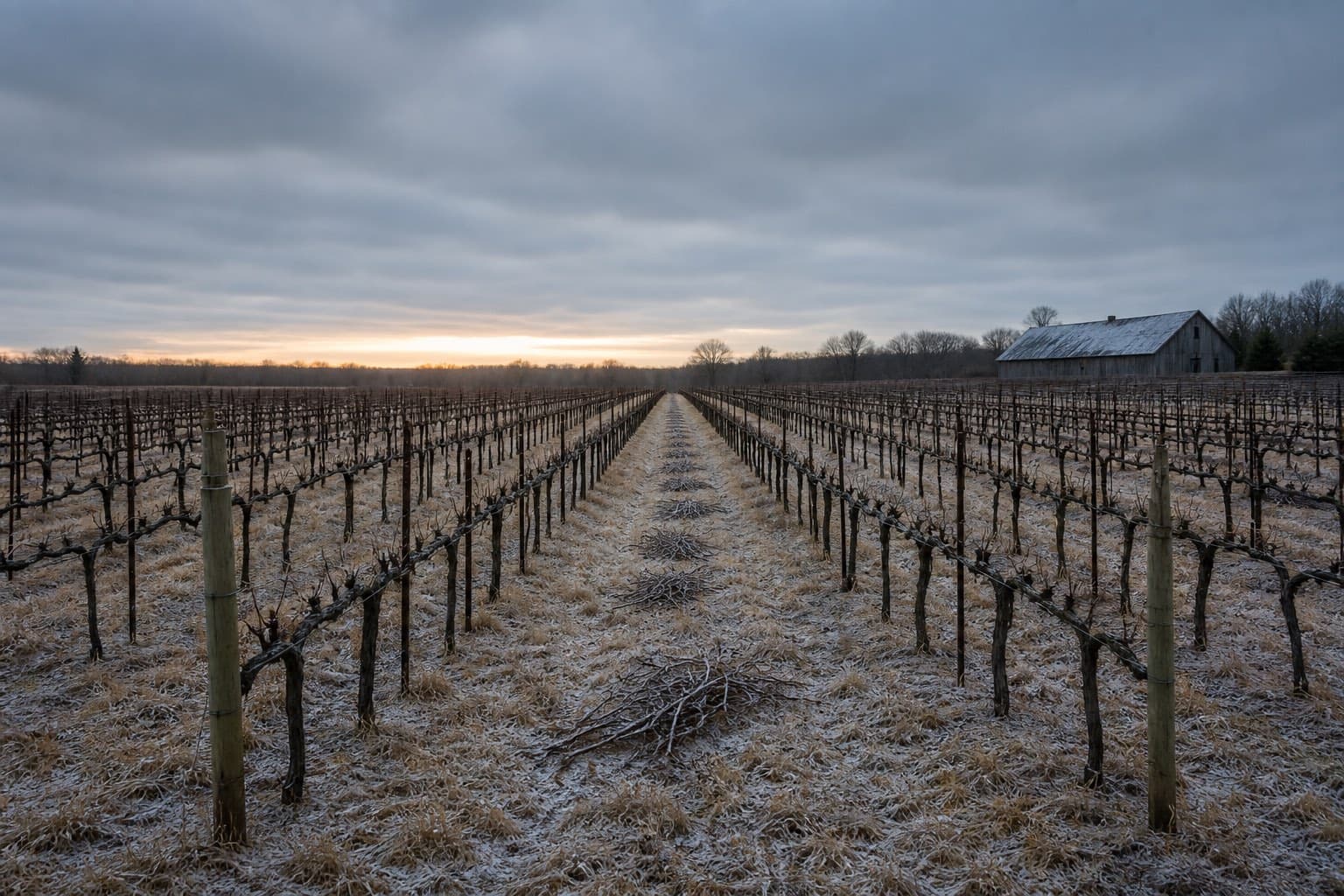
Deep winter is thinner than any tourism page will tell you. Nine of the 43 open rooms — a different nine from the midweek closures above — either shut or shrink: McCall Wines closes for January and February, Croteaux Vineyards and Harbes Vineyard close for the season entirely, Woodside Orchards drops to weekends, Mattebella Vineyards often runs Friday to Sunday, Baiting Hollow Farm Vineyard has recently done the same, Bridge Lane Tasting Room closes Monday to Wednesday, RGNY closes Tuesday and Wednesday, and Riverhead Ciderhouse shuts for two to three weeks in January. January averages 40°F with about 24 nights below freezing, so every outdoor seat on the East End is gone.
What you get in exchange is access. The rooms are quiet enough for an actual conversation with whoever is pouring, and this is a working season in the cellar rather than a dormant one — pruning starts in January, and the whites and rosé are being stabilised and bottled through late winter. Lieb Cellars markets its own off-season on exactly that basis. It is also the right season for the expensive indoor experiences that feel like a waste of a sunny day: Macari Vineyards’s barrel cellar at $75, Lenz Winery’s VIP tasting at the same price, Sannino Vineyard’s vine-to-wine tour at $100.
One rule for a winter trip: call. Winter hours drift more than any website reflects, and several rooms are already inconsistent in high season — Duck Walk Vineyards North publishes conflicting hours between pages, Sannino Vineyard’s FAQ and booking system disagree, Long Island Spirits lists spring hours year round, and Jason's Vineyard closes for weather with little notice online.
What is in the glass when you arrive
The last axis is the one almost nobody plans around, and it changes the trip more than the weather does. Rosé is a spring and summer wine here in the literal sense: Croteaux Vineyards, the only estate in the country growing exclusively for rosé, harvests in September, bottles in February, releases at the start of the season and is sold out by autumn. Arrive in October wanting this year’s pink and you may be looking at an empty shelf.
Spring is the release season more broadly — the previous year’s whites and the reds from the vintage before come out of tank and barrel in those months, which is why a March or April visit often has genuinely new wine on the list. Sparkling is the exception in both directions: it is picked first in September and released years later, and Sparkling Pointe is the one house on the fork that pours nothing else, in any month. The Cabernet Franc and Merlot that made this region’s reputation are the wines that reward the cold months, when the room is quiet and the barrel tastings are running.
Once the month is settled, the rest of the sequencing is elsewhere on this site: the full planning guide covers the fork, the transport and the reservation rules, how many wineries fit in a day settles the pacing, and the 34 North Fork rooms in driving order turn a date into a route. If you would rather be asked than read, the quiz asks when you are coming and does the filtering for you.
Best time to visit Long Island wine country: FAQ
What is the best month to visit Long Island wine country?
October if you want the wine at its most alive, and late May or early June if you want the easiest day. October gives you the crush in progress, reds coming into the cellar and average highs of 65°F, but it also brings the fall farm traffic. Late May and early June give you highs in the seventies, every tasting room open, the lawns and gardens back out after their winter closure, and a fraction of the cars. The compromise most people are actually looking for is the second half of October on a weekday.
Is fall really the best time to visit the North Fork?
For the atmosphere, yes — harvest runs from early September into early November and you are tasting while the cellar is working. For the logistics, it is the hardest month of the year. Southold and Riverhead police describe Sound Avenue as a volume problem every fall, with named bottlenecks at Jamesport and Laurel, and residents report ten-minute drives taking an hour on peak weekends. Seven of the venues on this site sit on that road. The other three dozen are on Main Road, Oregon Road or County Road 48, which is how you visit in October without sitting in the queue.
When is harvest on the North Fork?
Early September to early November. Sparkling fruit is picked first — Lieb in Cutchogue started its méthode champenoise picks in early September in 2025, about a week ahead of schedule — then the still whites, then the reds through October, with Cabernet Sauvignon and Petit Verdot last. Petit Verdot normally comes in during the first week of November. Macari flags harvest traffic on its own site from August through October.
Are Long Island wineries open in winter?
Most are, but nine of the 43 rooms either close or shrink to weekends. McCall shuts for January and February, Croteaux and Harbes close for the season entirely, Woodside and Mattebella drop to weekends, Baiting Hollow has recently run Friday to Sunday, Bridge Lane closes Monday to Wednesday off-season, RGNY closes Tuesday and Wednesday in January and February, and Riverhead Ciderhouse shuts for two to three weeks in January. Winter hours also drift more than any published page admits, so call the day before rather than trusting a listing.
What is the best day of the week to visit Long Island wineries?
Thursday, in every season. Nine rooms are dark on a Tuesday or a Wednesday — Coffee Pot closes Tuesday through Thursday, Jamesport Farm Brewery and Chronicle close Tuesday and Wednesday, Terra Vite closes Monday and Tuesday, Jamesport Vineyards closes Wednesday, Riverhead Ciderhouse and One Woman close Tuesday, Woodside is often shut Wednesday, and Bridge Lane drops to Thursday through Sunday off-season. On a peak Saturday the rush lands between roughly 1:30 and 5 p.m., which is the busiest window of the week in any month.
What is the weather like on the North Fork by month?
Average highs at the Riverhead research farm, on the 1991–2020 normals, run 40°F in January, 48°F in March, 60°F in April, 70°F in May, 79°F in June, 84°F in July, 82°F in August, 76°F in September, 65°F in October, 54°F in November and 45°F in December. July carries about five days above 90°F, January about 24 nights below freezing, and rainfall is spread evenly at three to four and a half inches every month of the year.
When do the lawns, gardens and patios close?
November, almost without exception. Croteaux runs its garden from April to late November, Bridge Lane its lawn from April to November, Mattebella its tour from April to November, Lieb its patio and lawn from May to November, Paumanok its lawn chairs from May to November, and Pugliese schedules music from May to mid-November. Twin Fork opens its beer garden in the warm months only. If the outdoor space is the reason you are going, that window is your season.
Is it worth visiting in March?
For a certain kind of visit, yes. Nothing is crowded, the tasting rooms are staffed by people with time to talk, and the vineyard is between pruning and bud break, so you can see the year being set up. Lieb makes the pitch for its own off-season openly. What you give up is every outdoor seat, roughly half the reason people come, and highs that average 48°F. Go in March for the wine and the conversation, not for the lawn.
Keep planning
Costs
Tasting Fees and What to Expect
A flight runs $18 to $60, and the spread is not really about the wine. Seventeen of the 42 open rooms publish no price at all, the same $25 buys three pours in one room and six in another, and the fee is quietly buying you a 90-minute table.
Trip Planning
Bachelorette Wine Tour Without Getting Turned Away
A bachelorette party of four can walk into almost any venue. A party of ten arriving by bus will be turned away at most of them. Party size limits, vehicle restrictions, and which rooms actually welcome large groups.
Booking
Which Long Island Wineries Need Reservations
Guides will tell you most estates now require booking. Their own pages say otherwise: 27 rooms take walk-ins outright. The number that changes everything is not the day of the week, it is how many of you there are.
Trip Planning
How to Plan a Long Island Wine Tour
Which fork to pick, the two days of the week half the North Fork is shut, how to get out here without a designated driver, what a flight actually costs, and the rooms that turn a hired van away at the driveway.
Trip Planning
How Many Wineries to Visit in One Day
Every guide says three or four and none of them shows the arithmetic. Here it is: the 90-minute table, the 5 p.m. close, and how many standard drinks are actually in a five-wine flight.
Collections
Long Island Winery Collections
11 curated lists — the whole North Fork in driving order, the quality cut, the nine rooms in Cutchogue, date night, groups, kids, first tastings, dogs, and rooms with a real kitchen.